
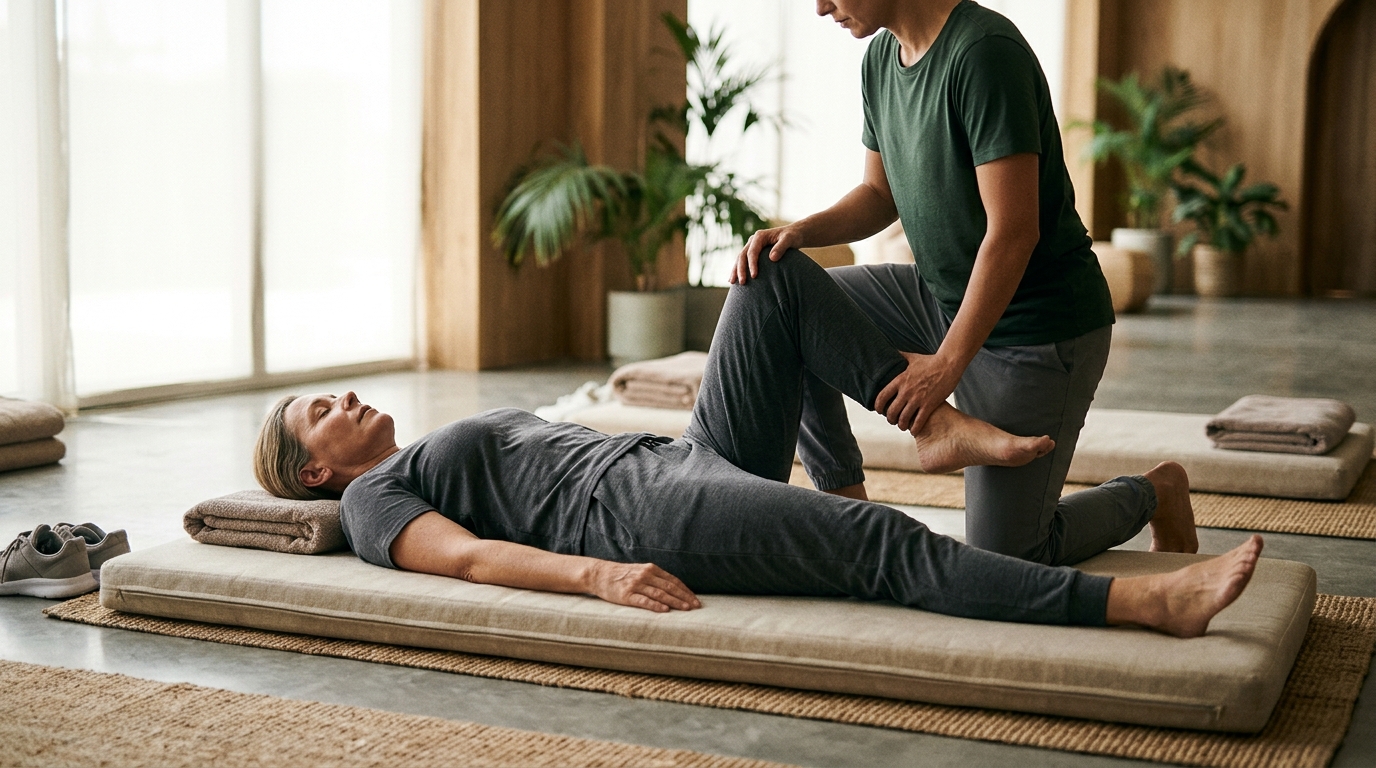
Assisted stretching is a guided mobility practice where a trained professional uses their hands, body weight, or tools to help you achieve a deeper, safer stretch than you could manage alone. This method is highly effective for everyone, from sedentary office workers to elite athletes, because it bypasses the body's natural protective reflexes to unlock true flexibility. At LIMBR, we specialize in evidence-based mobility training that helps you move better, recover faster, and live pain-free.
1. Enhanced Range of Motion for Sedentary Individuals
Breaks the cycle of stiffness caused by prolonged sitting. Many people spend eight or more hours a day in a seated position, which leads to shortened hip flexors and tight hamstrings. Assisted stretching allows a professional to gently force these muscles into a lengthened position, counteracting the daily compression. This is particularly beneficial for those who feel their body is 'locked' and cannot move freely.
2. Accelerated Recovery for Active Athletes
Reduces muscle soreness and speeds up tissue repair. For athletes and high-frequency gym-goers, recovery is just as important as the workout itself. By using assisted techniques, we can target specific muscle groups that are under high tension, promoting blood flow and reducing inflammation. This helps you return to training with less stiffness and greater readiness.
3. Improved Postural Alignment for Desk Workers
Corrects structural imbalances before they become chronic pain. Poor posture is a common issue for those working in front of computers, often resulting in rounded shoulders and a forward head position. Assisted stretching helps lengthen the anterior chest muscles and strengthen the posterior chain, restoring the spine to its natural alignment. This proactive approach prevents the development of long-term back and neck pain.
4. Injury Prevention Through Controlled Mobility
Builds resilience in joints and connective tissues. Injuries often occur when a muscle is not prepared for the range of motion required by a specific activity. By systematically improving your mobility through assisted sessions, you ensure that your joints can move through their full, safe range. This preparation is crucial for preventing strains and tears during sudden movements or new physical challenges.
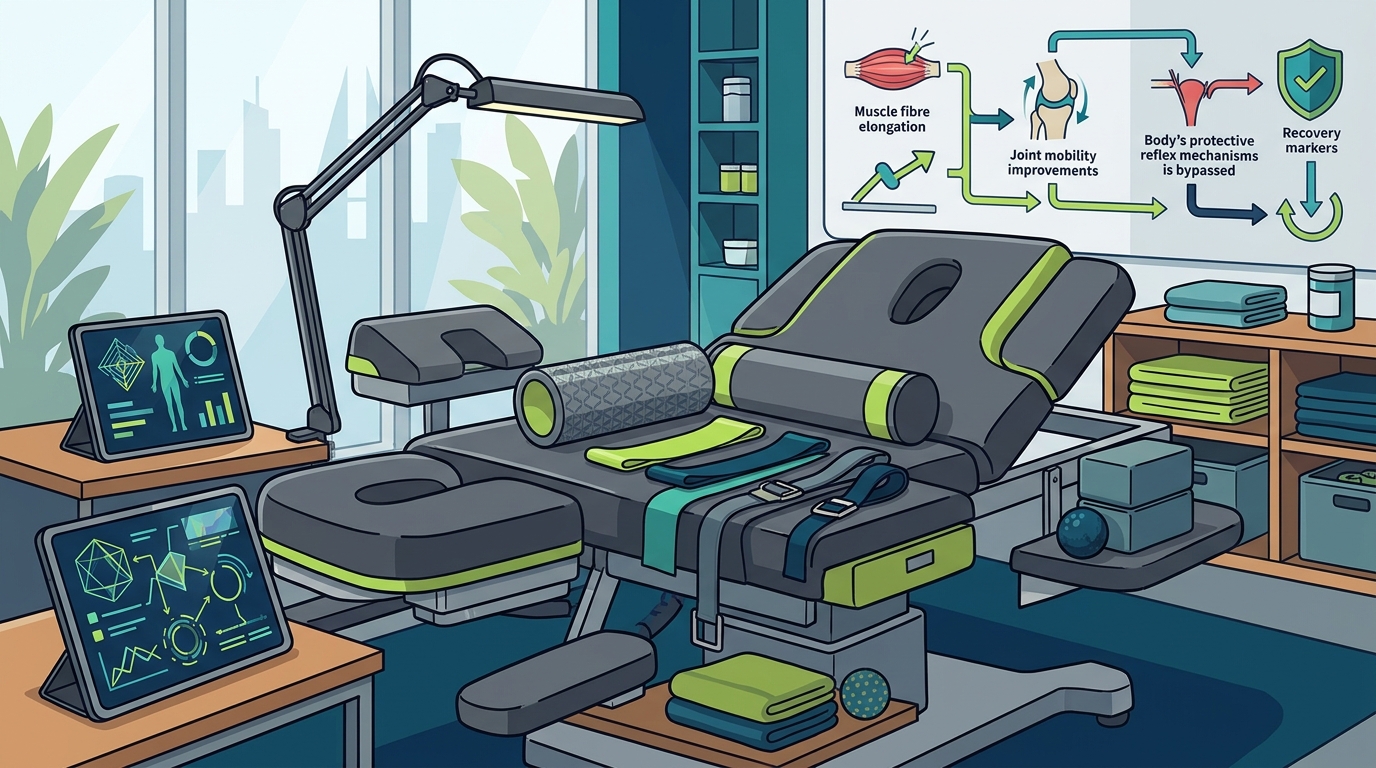
5. Mental Clarity and Stress Reduction
Activates the parasympathetic nervous system for deep relaxation. Stretching is not just physical; it is a powerful tool for mental health. The slow, controlled nature of assisted stretching encourages deep breathing and a state of calm. This helps lower cortisol levels and reduces the physical tension associated with stress, leaving you feeling mentally clear and emotionally balanced.
6. Increased Flexibility for Older Adults
Maintains independence and functional movement as you age. As we age, our natural flexibility decreases, making daily tasks like bending to tie shoes or reaching for high shelves more difficult. Assisted stretching provides a safe way to regain and maintain this functional mobility. It helps older adults stay active, independent, and confident in their daily movements.
7. Personalized Feedback and Technique Correction
Provides real-time adjustments that self-stretching cannot offer. One of the unique advantages of working with a professional is the immediate feedback on your body's response. A trainer can identify areas of restriction that you may not be aware of and adjust the stretch to target them precisely. This personalized attention ensures that you are getting the most out of every session and progressing safely.
Choosing the Right Approach for Your Level
Selecting the right assisted stretching session depends on your current activity level and specific goals. If you are largely sedentary, focus on general mobility and postural correction. If you are an athlete, prioritize recovery and sport-specific range of motion. At LIMBR, our experts assess your unique needs to create a tailored plan that supports your journey to better health.
Frequently Asked Questions
Is assisted stretching safe for beginners?
Yes, assisted stretching is safe for beginners when performed by a trained professional. The trainer controls the depth and intensity of the stretch, ensuring you stay within a safe range of motion. This makes it an excellent starting point for those who have never stretched before.
How often should I get assisted stretching?
The frequency depends on your goals and activity level. For general wellness, once or twice a week is often sufficient. Athletes or those recovering from injury may benefit from more frequent sessions. Consistency is key to seeing long-term improvements in flexibility and mobility.
Can assisted stretching help with chronic pain?
Assisted stretching can help alleviate pain caused by muscle tightness and poor posture. However, it is not a cure for all types of chronic pain. If you have a medical condition, it is important to consult with a physician before starting any new exercise or stretching program.
What is the difference between assisted stretching and yoga?
Yoga is a self-directed practice that combines movement, breath, and meditation. Assisted stretching involves a professional guiding you through specific stretches to target tight areas. While yoga can improve flexibility, assisted stretching offers a more targeted and passive approach to mobility.
Do I need to be flexible to start assisted stretching?
No, you do not need to be flexible to start. In fact, assisted stretching is designed to help you become more flexible. The professional will work with your current level of mobility, gradually improving your range of motion over time.
Start Your Mobility Journey at LIMBR
Ready to unlock your body's true potential? At LIMBR, we combine innovative mobility training with holistic wellness therapies to help you achieve a healthier and more flexible body. Whether you are enhancing performance or simply finding balance, our team is here to guide you every step of the way. Explore our services to find the perfect fit for your needs.