
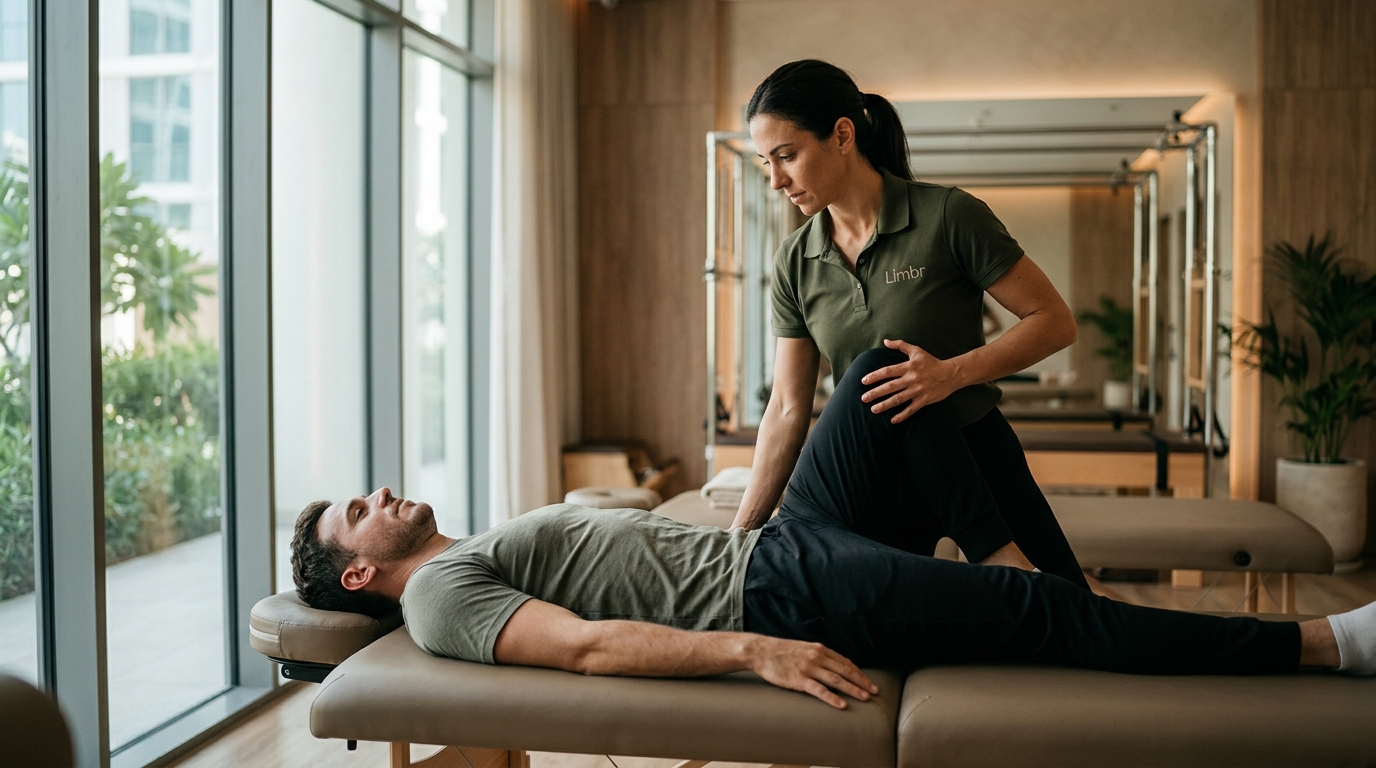
Assisted stretching is a guided technique where a professional helps you achieve deeper, safer ranges of motion than you can reach alone. At LIMBR, our expert-led sessions target specific tight areas to improve joint health and accelerate muscle repair. This guide covers how assisted stretching impacts range of motion, PNF techniques, DOMS recovery, injury prevention, and blood circulation.
Expanding Range of Motion
Range of motion (ROM) is the degree of movement possible at a joint. Many individuals struggle to achieve full ROM due to muscle tightness or joint restrictions. Assisted stretching allows a practitioner to apply controlled force, helping muscles lengthen beyond their current limits safely. This is particularly effective for joints that are difficult to stretch independently, such as the hips and shoulders.
Active vs. Passive Mobility
Flexibility is the ability of a muscle to lengthen, while mobility is the ability to move a joint through its full range with control. Assisted stretching bridges the gap between these two concepts. By guiding the limb through its full arc, the practitioner helps the nervous system accept a new, larger range of motion. This leads to improved functional movement in daily activities and sports.
Joint Health and Synovial Fluid
Moving a joint through its full range stimulates the production of synovial fluid. This fluid lubricates the joint, reducing friction between cartilage surfaces. Regular assisted stretching sessions keep joints well-lubricated, which helps prevent stiffness and degenerative conditions. At LIMBR, our mobility-focused recovery sessions are designed to restore this natural joint health.
PNF Stretching Technique
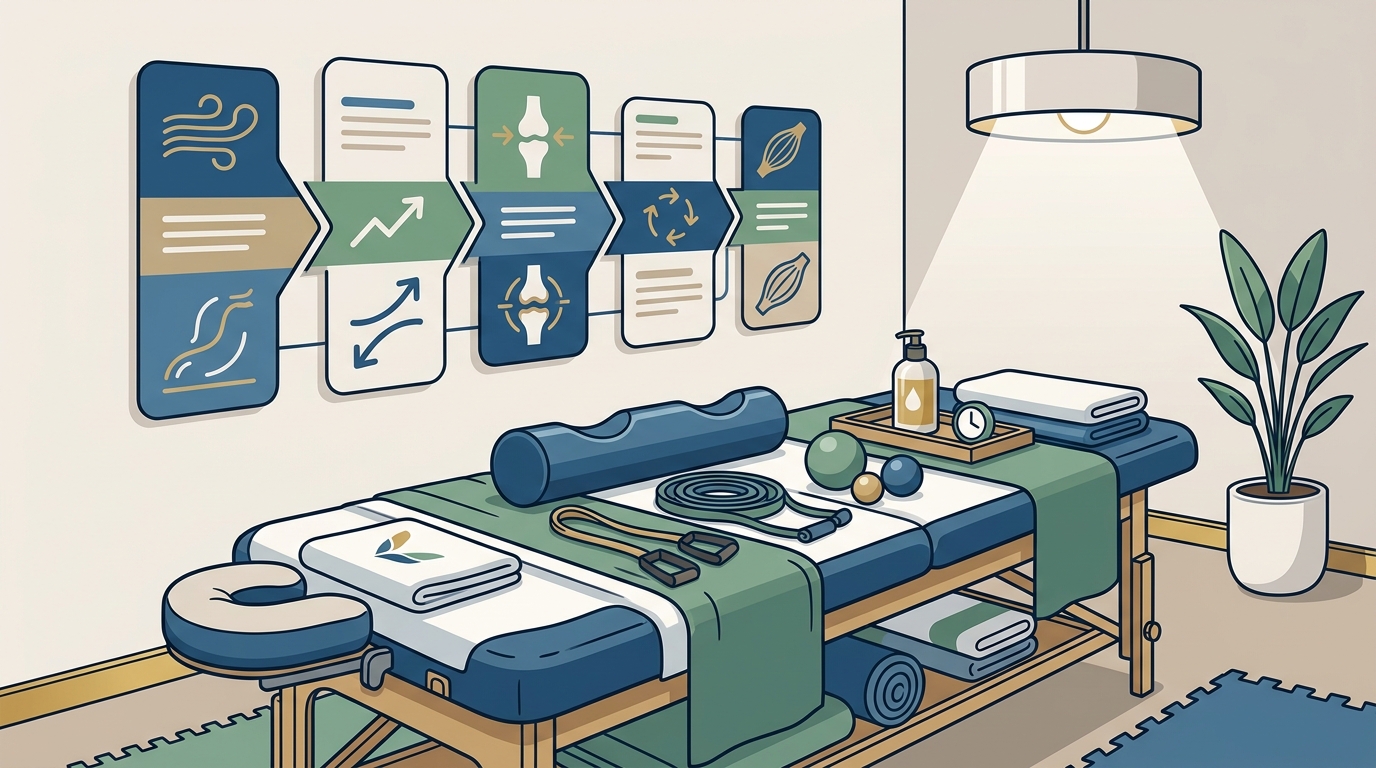
Proprioceptive Neuromuscular Facilitation (PNF) is a stretching method that combines stretching and contracting of the muscle group being stretched. This technique is highly effective for increasing flexibility quickly. The process involves a stretch, an isometric contraction against resistance, and then a deeper stretch. This sequence tricks the nervous system into allowing greater muscle length.
How PNF Works
PNF utilizes the body's natural reflexes to reduce muscle tension. When you contract a muscle against resistance, it triggers a relaxation response known as autogenic inhibition. This allows the muscle to relax and lengthen further than it would with static stretching alone. It is a powerful tool for athletes and individuals with chronic tightness.
Professional Application
Performing PNF correctly requires precise timing and force application. At LIMBR, our certified trainers use PNF techniques to target specific problem areas. This ensures that the stretch is safe and effective, maximizing the benefits of each session. You can learn more about our approach in our guide on how regular stretching improves your mental and physical health.
Accelerating DOMS Recovery
Delayed Onset Muscle Soreness (DOMS) is the muscle pain felt 24 to 72 hours after intense exercise. While DOMS is a normal part of training, it can hinder performance and consistency. Assisted stretching helps alleviate DOMS by improving blood flow and reducing muscle tension. This supports faster muscle repair and reduces the duration of soreness.
Reducing Muscle Tension
After a workout, muscles can become tight and develop knots. Assisted stretching helps release this tension, promoting better muscle balance and alignment. By targeting specific tight areas, our practitioners help flush out metabolic waste products that contribute to soreness. This leads to a faster return to full function.
Enhancing Circulation
Stretching improves circulation, which is crucial for muscle recovery. Increased blood flow delivers oxygen and nutrients to damaged muscle fibers while removing waste products. At LIMBR, our recovery sessions are designed to boost this circulation, helping your muscles bounce back more efficiently. You can explore our full range of mobility, recovery, and stretching services to find the right fit for your needs.
Injury Prevention Strategies
Injury prevention is a primary goal of assisted stretching. When muscles are tight and joints are restricted, the body compensates by placing stress on surrounding areas. This increases the risk of strains, pulls, and overuse injuries. By restoring muscle balance and improving joint stability, assisted stretching helps protect your body from these common issues.
Correcting Muscle Imbalances
Muscle imbalances are a leading cause of injury. For example, tight hip flexors can pull on the lower back, leading to pain and dysfunction. Assisted stretching helps correct these imbalances by lengthening tight muscles and strengthening weak ones. This creates a more balanced and resilient body.
Improving Movement Mechanics
Proper movement techniques are essential for staying injury-free. Assisted stretching helps improve movement mechanics by increasing flexibility and mobility. This allows you to move with better alignment and control, reducing the risk of injury during exercise and daily activities. Our team at LIMBR works with you to develop a personalized plan that addresses your specific movement patterns.
Boosting Blood Circulation
Blood circulation is vital for overall health and recovery. Assisted stretching enhances circulation by promoting the flow of blood to muscles and joints. This increased flow delivers oxygen and nutrients to tissues while removing waste products. The result is reduced inflammation and faster recovery.
Reducing Inflammation
Improved circulation helps reduce inflammation in the body. Inflammation is a natural response to injury or intense exercise, but chronic inflammation can lead to pain and dysfunction. By enhancing blood flow, assisted stretching helps the body resolve inflammation more quickly. This supports overall wellness and reduces discomfort.
Supporting Overall Wellness
Key Takeaways
- Assisted stretching helps achieve deeper, safer ranges of motion than self-stretching.
- PNF techniques are highly effective for increasing flexibility quickly and safely.
- Assisted stretching can reduce the duration and intensity of DOMS.
- Improving flexibility and mobility helps prevent common injuries.
- Enhanced blood circulation supports faster muscle repair and reduces inflammation.
- Professional guidance ensures that stretching is performed safely and effectively.
- Regular assisted stretching sessions contribute to overall physical and mental well-being.
Frequently Asked Questions
What is assisted stretching?
Assisted stretching is a technique where a professional helps you stretch your muscles and joints. The practitioner applies controlled force to help you achieve a deeper stretch than you could reach on your own.
How is assisted stretching different from self-stretching?
Assisted stretching allows for greater depth and safety. A professional can target specific areas and apply the correct amount of force, reducing the risk of injury and maximizing the benefits.
Is PNF stretching safe?
Yes, PNF stretching is safe when performed by a trained professional. The technique uses controlled contractions and stretches to increase flexibility without causing harm.
How often should I do assisted stretching?
The frequency depends on your individual needs and goals. Many people benefit from one or two sessions per week, but your practitioner can recommend a schedule that works for you.
Can assisted stretching help with chronic pain?
Yes, assisted stretching can help alleviate chronic pain by releasing muscle tension and improving joint mobility. It is often used as part of a comprehensive pain management plan.
Do I need to be flexible to start assisted stretching?
No, you do not need to be flexible to start. Assisted stretching is suitable for all levels of flexibility, from beginners to advanced athletes.
What should I expect in my first session?
In your first session, your practitioner will assess your flexibility and identify any areas of tightness. They will then guide you through a series of stretches, explaining the benefits of each technique.
Start Your Wellness Journey at LIMBR
Assisted stretching is a powerful tool for improving flexibility, accelerating recovery, and preventing injury. By working with a professional, you can achieve results that are difficult to reach on your own. At LIMBR, we are committed to helping you unlock your body's true potential through evidence-based mobility and flexibility training. Our team of experts is ready to guide you every step of the way. according to A Survey on
Whether you are an athlete looking to improve performance or someone dealing with daily physical stress, our holistic approach will help you achieve a healthier and more flexible body. To plan your visit, and discover the transformative power of assisted stretching.